Sports is one of the most fun and exciting genres a photographer can shoot. But it also requires gear that can keep up with the speed of the action.
My top pick for the best Sony camera for sports photography is the Sony A9III. It has all the features you need to capture even the fastest moving sports at extremely high image quality.
Keep reading for my full breakdown of this camera and five others that might be right for you.
Photography Goals uses affiliate links. When you buy products through the links on our site, we may earn a commission.

1. Sony A9III
This 45 megapixel beast can keep up with the best in terms of shooting speed and autofocus and still give you high resolution images to get spectacular sports photos.
Most of you reading this are not professionals so I usually make the top pick a camera that isn’t at the top of the budget range. But when it comes to Sony cameras, there is one that is clearly a sports photography beast. So if you want to shoot sports and can afford it, this is the camera for you.
The Sony A9 III will be getting added to my overall list of the Best Cameras For Sports Photography.
So let’s get to why I chose the A9 III as the top pick. First let’s take a look at the specs…
Sony A9 III Tech Specifications
- Lens Mount: Sony E
- Megapixels: 24.6
- Sensor Size: Full-frame (35.6 × 23.8 mm) — Global Shutter
- ISO Range: 250–25,600 (expandable 125–51,200)
- AF Points: 759 phase-detect (w/ Subject tracking of People and Animals)
- Continuous shooting speed: Up to 120 fps
- Stabilization: 5-axis IBIS, up to 8 stops
- Viewfinder: 9.44M-dot OLED, 0.90× magnification
- LCD: 3.2″ 2.1M-dot 4-axis tilt touchscreen
- Max video resolution: 4K 120p / 4K 60p oversampled from 6K
- Memory Card: Dual CFexpress Type A / SD UHS-II combo slots
- Dimensions: (W x H x D): 5.4 × 4.1 × 3.3 in (138.8 × 96.9 × 72.7 mm)
- Weight: 1.5 lb / 702 g (with battery)
Those specs are pretty impressive overall and when it comes to the ones that count for shooting sports, the A9 III has everything you need and then some.
In terms of fast shooting, you’re getting an insane 120 fps with electronic global shutter. I’ve rarely found that I NEEDED more than 20 fps even when shooting professional sports, but the extra speed basically ensures you never miss the perfect moment. It’s like shooting slow motion video and picking your favorite frame later.
The world’s first full-frame mirrorless camera with a global shutter, when it was launched in 2024.
Global shutter means that it exposes the entire sensor at exactly the same instant. The result is that you avoid that weird effect when something is moving very fast that makes it look curved. If you’re ever seen a still shot of a golfer swinging a club, you’ve probably seen this effect.
Note: The actual frames per second can vary based on the lens you’re using (especially when adapting older DSLR lenses) as well as the speed of the cards you’re using. For fastest rates and minimal buffer, use a fast CFexpress card and set it to write only to that card.
But the important feature here isn’t ONLY the frame per second, it’s that you can get that fast shutter speed while using the full features of the Sony autofocus system, which is among the best on the market .
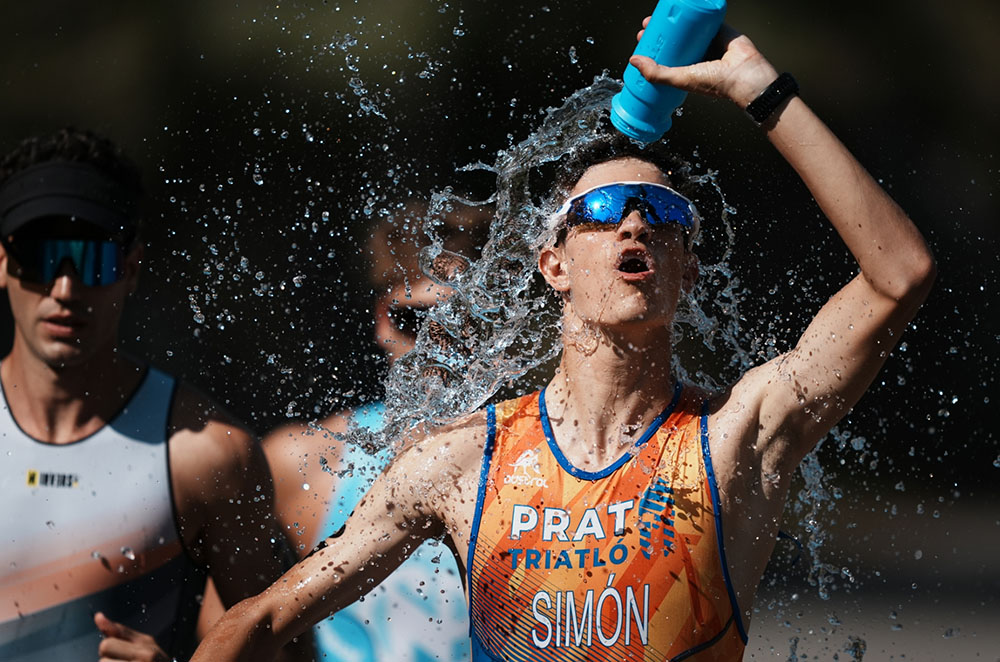
The autofocus system on the Sony A9III is one of the best on the market today. The subject tracking works exceptionally well. I was able to keep tracking the player with the ball, even with other players running in front of the subject. This is a small detail but invaluable.
When shooting sports where the players wear helmets, the A9III was able to find the heads and even detect the eyes under the helmet if the player is large enough in the frame. This is a massive upgrade from even the best DSLRs and many mirrorless cameras, where it can be difficult to get eyes in sharp focus in similar conditions.
This is a major reason why I recommend mirrorless cameras for any kind of action shooting. The average person will get better results from a mid-range mirrorless camera than even a high end DSLR when it comes to shooting in tricky focusing situations like sports.
The A9III also has blackout free shooting. This means that when you take a shot the viewfinder continues to display the live view of the the scene. This makes it easier to track fast moving action and continue to shoot.
Pros
- Insane 120 fps continuous shooting
- No distortion global shutter
- Excellent autofocus
Cons
- Only 24.6 MP
- Requires CFexpress cards
Ok, let’s talk a little about the downsides because no camera is perfect.
This is not a budget friendly camera. With an MSRP of $6,799.99, the global shutter and 120 fps comes at a premium that many hobbyists can’t justify.
With a lower resolution (24 MP) than some of the other options on this list, this camera will leave you with less cropping flexibility for sports compared to the A1. This camera sacrifices some resolution to get these blazing fast frames per second numbers.
Lastly, this camera requires fast CFexpress Type A cards to fully unlock 120 fps bursts, adding even more cost to an already expensive camera. Although, if you’re investing in a camera like this then a CFexpress card probably isn’t that big of a deal.
But if you’re ok with those negatives, then this is the ideal sports camera from Sony.

2. Sony A9 II
The Sony A9II is the predecessor to the top pick above and also has everything you need in a sports camera at a more affordable price point.
One of the best ways to save some money when buying a camera is to go one model older than the best camera in the lineup. So while the A9II doesn’t have some of the eye-popping specs of the top pick above, its still a top performer when shooting sports.
The biggest differences you’ll notice right away is that it does not have a global shutter and it maxes out at 20 frames per second. That being said, it’s also $2300 cheaper than the A9III.
Sony A9 II Tech Specifications
- Lens Mount: Sony E
- Megapixels: 24.2 MP
- Sensor Size: Full-frame (35.6 × 23.8 mm)
- ISO Range: 100–51,200 (expandable 50–204,800)
- AF Points: 693 phase-detect (w/ Subject tracking of People and Animals)
- Continuous shooting speed: Up to 20 fps
- Stabilization: 5-axis IBIS, up to 5 stops
- Viewfinder: 3.69M-dot OLED, 0.78× magnification
- LCD: 3.0″ 1.44M-dot tilt touchscreen
- Max video resolution: 4K 30p
- Memory Card: Dual SD UHS-II slots
- Dimensions: (W x H x D): 5.0 × 3.8 × 2.9 in (128.9 × 96.4 × 75.1 mm)
- Weight: 1.5 lb / 678g (with battery)
But as you cen see from the specs above, its still a top notch sports camera. With the release of the A9 III Sony has discontinued manufacturing these but there are still plenty available (check the links above) and you may even find some great deals.
Having shot plenty of sporting events, 20 frames per second is more than enough to capture any type of action (if you’re using a fast enough shutter speed).
The A9II also has blackout free shooting. It does this with 60fps live-view and almost no display lag in continuous shooting.
Speaking of tracking action, the A9II keeps up with almost any camera out there when it comes to autofocus. Sony’s eye autofocus is among the best in the industry when it comes to tracking. It’s great at locking onto a player and tracking their face even among other players.

Like any camera, though, you’ll get the best results if you learn how to use the fine tuning settings to match the type of tracking you need.
Pros
- 20 frames per second
- Excellent autofocus
Cons
- Still pricey for an older model
- 4K video is limited to 30p
But despite all these great features, its still relatively expensive, especially for a 2019 camera. For a lot of you it might be in that weird middle ground where its not compelling enough for a huge investment, but not cheap enough to be a budget pick.
It also doesn’t shoot 4k video faster than 30p so if you’re a hybrid shooter, this camera is less compelling than some of the other options on this list.
So if that sounds like what you’re thinking, then keep reading…
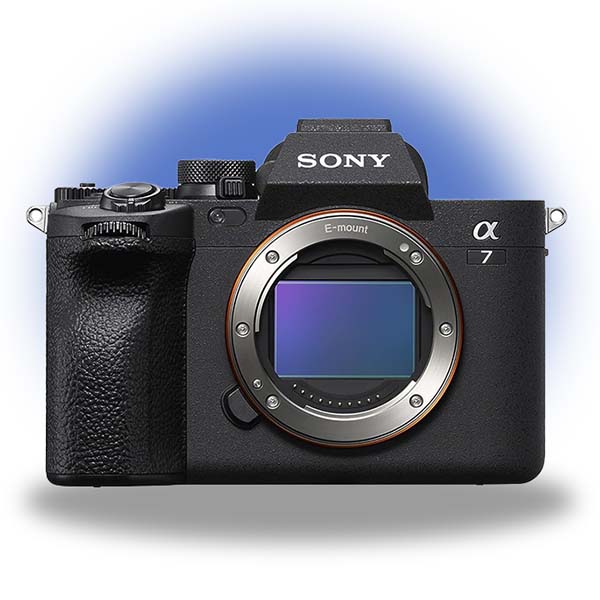
3. Sony A7 IV
This relatively affordable full frame camera is likely the sweet spot between performance and cost that most hobbyists and some pros should go for.
The A7 IV is more of a jack of all trades rather than a sports specific camera, but because it does everything well, you won’t be disappointed shooting sports with it.
Sony A7IV Tech Specifications
- Lens Mount: Sony E
- Megapixels: 33 MP
- Sensor Size: Full-frame (35.6 × 23.8 mm)
- ISO Range: 100–51,200 (expandable 50–204,800)
- AF Points: 759 phase-detect (w/ Subject tracking of People and Animals)
- Continuous shooting speed: Up to 10 fps
- Stabilization: 5-axis IBIS, up to 5.5 stops
- Viewfinder: 3.69M-dot OLED, 0.78× magnification
- LCD: 3.0″ 1.03M-dot tilt touchscreen
- Max video resolution: 4K 60p (super 35) / 4K 30p oversampled from 7K
- Memory Card: 1 CFexpress Type A slot + 1 SD UHS-II (shared bay)
- Dimensions: (W x H x D): 5.2 × 3.8 × 3.1 in (131.3 × 96.4 × 79.8 mm)
- Weight: 1.4 lb / 658g (with battery)
The A7 IV also sports Sony’s excellent subject tracking autofocus system.
The 33 megapixel resolution is also a really good choice by Sony. It allows for a good balance between high resolution and files that are manageable to deal with in post production.
It also can keep up with the top Sony cameras when it comes to autofocus. You’ll get excellent eye and subject tracking. This makes shooting fast moving action much easier.
Pros
- More affordable for a full frame camera
- 33 MP is a sweet spot for shooting sports
Cons
- Only 10 frames per second
- Rolling shutter effect
That said, its the slowest camera on this list at 10 fps. While this is plenty of speed to get good photos, some shooters may want more.
Another shortcoming of this camera is that it does suffer from the rolling shutter effect, unlike the cameras above. That means with very fast action (like a baseball or golf swing) you get that curved distortion in the image even at very high shutter speeds.
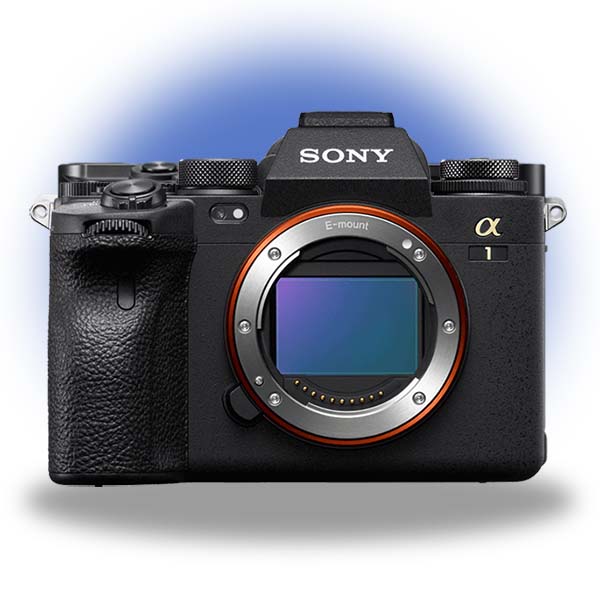
4. Sony A1
Seemingly built for shooting sports and fast action. If it is winthin your budget then the Sony A1 will give you all the firepower you need for sports.
The Sony A1 doesn’t have a global shutter like my top pick above but it does have a stacked sensor which minimizes any of that rolling shutter effect and allows you to shoot without any viewfinder blackout, which is essential to tracking fast moving athletes.
Sony A1 Tech Specifications
- Lens Mount: Sony E
- Megapixels: 50.1 MP
- Sensor Size: Full-frame (35.6 × 23.8 mm)
- ISO Range: 100–32,000 (expandable 50–102,400)
- AF Points: 759 phase-detect (w/ Subject tracking of People and Animals)
- Continuous shooting speed: Up to 30 fps
- Stabilization: 5-axis IBIS, up to 5.5 stops
- Viewfinder: 9.44M-dot OLED, 0.90× magnification
- LCD: 3.0″ 1.44M-dot tilt touchscreen
- Max video resolution: 8K 30p / 4K 120p
- Memory Card: Dual CFexpress Type A / SD UHS-II combo slots
- Dimensions: (W x H x D): 5.1 × 3.8 × 3.1 in (128.9 × 96.9 × 80.8 mm)
- Weight: 1.6 lb / 737 g (with battery)
The biggest advantage the Sony A1 has over the other options above is the 50.1 MP resolution.
You may think that high resolution cameras are more for shooting portraits and landscapes, but they can be very useful for sports as well.
They allow you to shoot a little wider to make sure you don’t miss anything and then crop in later to frame your subject perfectly. It also means that you effectively get a little more reach out of your lenses.
What makes this even more impressive is that the A1 shoots 50.1 MP images and can still push out up to 30 frames per second.
Personally, I prefer shooting with high res cameras like this because it means I can shoot sports but also other types of photography that may lend it self to higher resolution images.
Pros
- High resolution 50 MP images
- 30 frames per second
Cons
- Almost costs as much as the A9III
- 50 MP images can slow down your workflow
The downside to this camera is that it costs almost as much as the top pick above. So you will have to desice if high resolution or insance shooting speeds are more important to you.
High res files can also slow you down a little. The camera can shoot 30 fps but the buffer can fill up quickly. 50 MP files can also slow you down duing editing and processing the images as well.
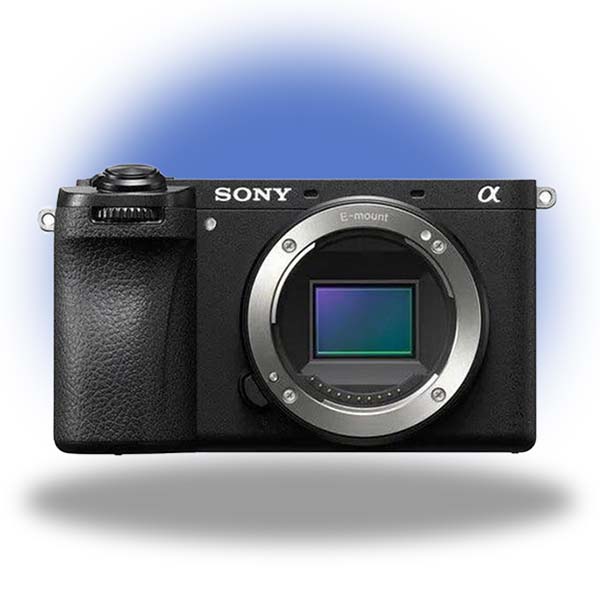
5. Sony A6700
For those of you that aren’t ready to give on on DSLRs, the 6D Mark II is a great choice for shooting sports.
One of the best ways to save money and still get great performance for shooting sports is to go with a crop sensor camera.
A crop sensor camera gives you more reach with the same focal length lens compared to a full frame camera. The crop factor for Sony is 1.5x which means that a 100mm lens on a crop sensor camera will have the same field of view as a 150mm lens on full frame.
The Sony system uses the same mount for crop sensor cameras and full frame cameras. That means that with a crop sensor camera, you can choose to use the smaller, lighter, and less expensive crop sensor lenses OR you can use full frame lenses in anticipation of upgrading the camera body later.
You can use a full frame lens on a crop sensor camera but you can’t use a crop sensor lens on a full frame camera. Using a full frame lens on a crop sensor camera means that you’re only using a portion of the image the lense projects, so if you never plan on upgrading your body to full frame then it’s a bit of a waste of money to do that.
But if you do plan on upgrading your body, it may be wise to begin investing in full frame lenses ahead of time so you don’t have to buy them at the same time as the new body.
Additionally, crop sensor cameras are typically smaller and lighter which can be a big benefit if you want to make it a little easier to get through an entire game without more arm fatigue or back pain.
As a professional, I own multiple full frame cameras, but this is the kind of camera I would put in my bag to take to my kid’s soccer game when I didn’t want to carry the bigger camera body.
Now let’s take a look specifically at the A6700…
Sony A6700 Tech Specifications
- Lens Mount: Sony E (APS-C)
- Megapixels: 26 MP
- Sensor Size: APS-C (23.5 × 15.6 mm)
- ISO Range: 100–32,000 (expandable 50–204,800)
- AF Points: 759 phase-detect (w/ Subject tracking of People and Animals)
- Continuous shooting speed: Up to 11 fps
- Stabilization: 5-axis IBIS, up to 5 stops
- Viewfinder: 2.36M-dot OLED, 0.70× magnification
- LCD: 3.0″ 1.03M-dot tilt touchscreen
- Max video resolution: 4K 120p / 4K 60p oversampled from 6K
- Memory Card: Single SD UHS-II slot
- Dimensions: (W x H x D): 4.7 × 2.7 × 2.8 in (122 × 69 × 75.1 mm)
- Weight: 1.1 lb / 493 g (with battery)
The 26 megapixels is on par with many of the other cameras on here. This will give you enough space to crop in and still get high resolution images for screen or print.
With a shooting speed of 11 fps, you’ve got enough speed to capture fast moving action. It’s not as much as some of the high end full frame cameras, but pro photographers have been shooting amazing sports photography with less than 10 fps for decades. So its not as big of a disadvantage as you might think.
The viewfinder is a bit of a step down in both resolution (2.36m dots) compared to the full frame options above, but this is something you might not even notice unless you compared both side by side.
Pros
- Affordable
- Crop sensor means more reach
Cons
- Low light performance slightly worse than full frame
- Only 11 frames per second
There are a few other compromises that you will have to accept if you want to save the cost by getting this camera.
First off, crop sensor cameras perform less well in low light than full frame cameras. This isn’t an issue if you’re shooting your kids soccer game in the middle of the day. But an indoor baskettball game in a poorly lit gym means high ISOs and more noise than if you had a full frame camera.
Also, the camera only has one card slot. So a card failure means you lose all your images because there’s no backup in the camera.
Overall, this is a great budget option if you want to save some money and get started shooting sports photography and focusing on building your lens collection instead of investing more money in a camera body.
You can find it for around $1500 currently by clicking the buttons above.
Sony Sports Cameras | Spec Comparison
Body Sony a9 III ›
Body Sony a9 II ›
Body Sony a1 ›
Body Sony a7 IV ›
Body Sony a6700 ›
| Spec | Sony a9 III | Sony a9 II | Sony a7 IV | Sony a1 | Sony a6700 |
|---|---|---|---|---|---|
| Lens Mount | Sony E-mount | Sony E-mount | Sony E-mount | Sony E-mount | Sony E-mount (APS-C) |
| Megapixels | 24.6 MP | 24.2 MP | 33.0 MP | 50.1 MP | 26.0 MP |
| Sensor Size | Full-frame (35.6 × 23.8 mm) | Full-frame (35.6 × 23.8 mm) | Full-frame (35.9 × 23.9 mm) | Full-frame (35.9 × 24.0 mm) | APS-C (~23.3 × 15.5 mm) |
| ISO Range (photo) | 250–25,600 (exp. 125–51,200) | 100–51,200 (exp. 50–204,800) | 100–51,200 (exp. 50–204,800) | 100–32,000 (exp. 50–102,400) | 100–32,000 (exp. 50–102,400) |
| AF Points | 759 phase-detect | 693 phase-detect | 759 phase-detect | 759 phase-detect | 759 phase-detect |
| Continuous Shooting | Up to 120 fps (electronic) | Up to 20 fps (electronic) | Up to 10 fps | Up to 30 fps (electronic) | Up to 11 fps |
| Stabilization | 5-axis IBIS, up to 8.0 stops | 5-axis IBIS, up to 5.5 stops | 5-axis IBIS, up to 5.5 stops | 5-axis IBIS, up to 5.5 stops | 5-axis IBIS, up to 5.0 stops |
| Viewfinder | 0.64" 9.44M-dot OLED, 0.90× | 3.69M-dot OLED, 0.78× | 3.69M-dot OLED, 0.78× | 0.64" 9.44M-dot OLED, 0.90× | 2.36M-dot OLED (approx. 0.7×) |
| LCD | 3.2" 2.1M-dot 4-axis articulating touchscreen | 3.0" 1.44M-dot tilting touchscreen | 3.0" 1.03M-dot vari-angle touchscreen | 3.0" 1.44M-dot tilting touchscreen | 3.0" 1.03M-dot vari-angle touchscreen |
| Max Video Resolution | UHD 4K up to 120p | UHD 4K up to 30p | UHD 4K up to 60p | 8K up to 30p, 4K up to 120p | UHD 4K up to 120p |
| Memory Card Slots | 2× CFexpress Type A / SD UHS-II | 2× SD UHS-II | Slot 1: CFexpress Type A / SD UHS-II Slot 2: SD UHS-II |
2× CFexpress Type A / SD UHS-II | 1× SD UHS-II |
| Dimensions (W × H × D) | 136.1 × 96.9 × 82.9 mm | 128.9 × 96.4 × 77.5 mm | 131.3 × 96.4 × 79.8 mm | 128.9 × 96.9 × 80.8 mm | 122.0 × 69.0 × 75.1 mm |
| Weight | Approx. 702 g | Approx. 678 g | Approx. 658 g | Approx. 737 g | Approx. 493 g |
3 Sony Cameras You Should AVOID For Shooting Sports
Sony a6100
While this is a decent entry level camera, you’re going to be significantly limited shooting sports with it.
It has an older sutofocus system which struggles tracking faster subjects at times, especially when there are multiple subjects in the frame at once. It can be very frustrating to miss a great image becasue the autofocus jumped to a different subject.
It also struggles a little bit with the buffer filling up quickly which means that the camera has to stop shooting completely until the buffer clears. This can also be very frustrating.
Sony A7R IV
The Sony A7R IV is an excellent camera. It’s just the wrong tool for shooting sports.
This body uses a 61‑MP sensor, generating very large RAW files—great for landscapes or advertising, but heavy for sports workflows where speed and buffer depth matter more than extreme resolution. This significantly slows down shooting and editing.
It sits near $3k new, so for that proce you can get a pro‑level body that offers faster action‑oriented options. For the money, shooters focused on sports can find options more suited for action rather than paying mostly for resolution.
Sony A7C II
Like the others above, the Sony A7C II isn’t a bad camera, its just not made for sports and for the price you would pay for this camera, you can find a Sony camera much better suited for your needs.
Why You Should Trust Me
I’ve been a professional photographer for about a decade and have had the opportunity to try a wide variety of cameras and lenses and shoot a lot of different genres of photography including sports at every level. I also speak to experts that shoot sports all the time to help determine what to look for in these cameras.
Top Factors For Choosing A Sony Camera For Sports Photography
After shooting local sports for a few years, here are the top features and specifications I would look for in a camera to shoot sports.
Autofocus System
The most difficult thing about shooting sports at any level is getting the right thing in focus at the right time. The faster and more accurate your autofocus system is, the better your results will be.
The latest mirrorless cameras have really taken a huge leap forward in autofocus technology in recent years. Because they use the sensor itself to acquire focus, mirrorless cameras can have far more coverage across the frame than DSLRs. They also use contrast detection which tends to be more accurate and doesn’t require tuning like DSLRs.
Mirrorless cameras have also begun to employ smart algorithms that let your camera do things like detecting the eyes of your subject with often impressive accuracy and speed. This can be very helpful for shooting sports because the goal is often to get the eyes of the player in focus.
Most of the the newer Sony mirrorless cameras have excellent AF systems including something called eye autofocus which does a really great job at finding the eyes of a person (even a fast moving athlete) and locking onto them. Even if the sport involves helmets, these cameras will lock onto the helmets and even get the eyes inside the helmet in focus on some angles.
This is one of the main reasons why I recommend the mirrorless cameras above as my top picks for sports.
Continuous Shooting Speed
Continuous shooting speed is important while shooting sports. You still have to time it so that you press the shutter at the peak of action, but the ability to shoot 10 or more frames per second will improve your chances of capturing the perfect moment.
But don’t rely on this too heavily. Developing the skill of capturing the perfect moment is important for shooting sports too.
Another factor that goes hand in hand with continuous shooting is buffer size. This is the number of photos you can shoot continuously before your camera needs a break to write the files to your card.
Cameras with faster processors and those that use faster cards like CFexpress are going to have larger buffers and let you shoot at high speeds longer.

Dynamic Range and Low Light Performance
You might associate dynamic range and low light performance with other types of photography, but once you start shooting sports in varied situations, you’ll realize how important it is to have a good sensor…here’s why.
Dynamic range is the ability to capture bright areas and dark areas in the same shot. Often, sporting events take place outside in direct sunlight, which means very bright spots and harsh shadows. If your camera sensor has a good dynamic range, you can recover these extremes when editing the photos after the game.
Another common situation sports photographers encounter is low light. You might think that your local high school gym is bright, but if you want to shoot at high shutter speeds, those gym lights often are not bright enough.
That means using higher ISO settings in order to use fast enough shutter speeds to freeze the action. The better your camera can handle these high ISO settings, the better your images will turn out.
Ergonomics and Usability
Sports move fast, so you’ll want a camera that handles well and allows you to change settings fast and accurately in order to get the best results.
This is one place where Sony tends to fall short of some other manufacturers. So if you’re set on a Sony camera for sports, keep this in mind. If you aren’t set on the Sony system then check out my overall list of the best cameras for sports.
Even the new, smaller mirrorless cameras are made with ergonomics in mind. So rest assured that every camera on this list is going to be easy to use.
Lens Selection
You have to consider the lens lineup that will work with the camera that you choose. Sony has the oldest mirrorless system among the major full frame manufacturers so there’s a massive lineup of E mount lenses at all focal lengths and price ranges.
Ruggedness and Durability
Sports photographers tend to put their cameras through some tough use. You may find yourself shooting in the rain, snow, wind, heat, and other tough weather. You’ll also be moving around a lot and often be quite rough on your camera.
