The Nikon Zfc is a DX-format mirrorless camera built for photographers and creators who want Nikon’s Z-system image quality in a retro-inspired body. It takes much of the image-making logic of the original Z50 and wraps it in a design that is much more about experience, personality, and style.
Quick Verdict
The Nikon Z fc is one of the most charming cameras Nikon makes, and I understand why people are drawn to it. It gives you good DX image quality, access to Nikon’s Z mount, and a body that feels much more distinctive than most cameras in this category. The tradeoff is that I do not think it is the best Nikon DX buy on pure practicality. That title goes to the Z50II. Buy the Z fc if you want the style, the tactile controls, and the enthusiast appeal. Skip it if you want the most sensible all-around Nikon crop-sensor body.
Nikon ZFc
One of Nikon’s most charming cameras and an easy one to love, but not the most practical Nikon DX body if pure usability is your priority.
Who is this for?
Enthusiasts, travel photographers, street photographers, and buyers who care as much about the shooting experience and design as they do about pure practicality.
Worth getting?
Yes, if the retro styling and tactile controls are part of why you want the camera. If not, the Z50II is the smarter Nikon DX buy.
Check Price on Amazon Check Price at Adorama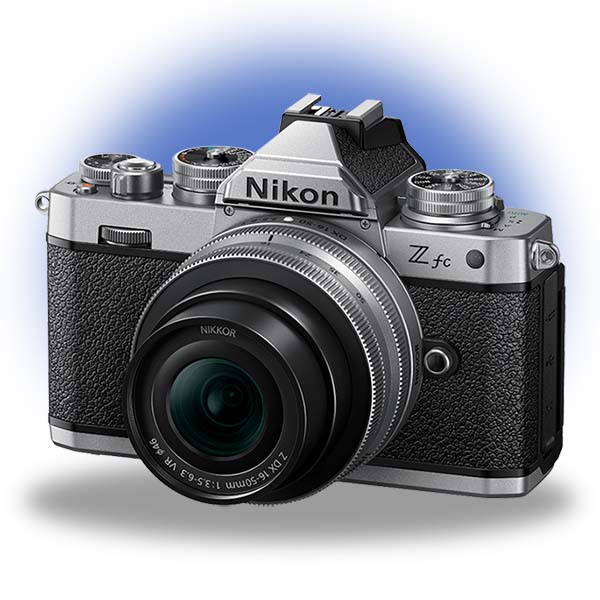
Key Features
The Z fc combines Nikon’s 20.9MP DX sensor, Nikon Z mount compatibility, a retro-inspired body, physical top dials, and a vari-angle screen. That combination is what makes it appealing.
This camera is not about winning a spec-sheet argument. It is about making the act of using the camera more enjoyable.
Tech Specifications
- Lens Mount: Nikon Z mount
- Megapixels: 20.9MP
- Sensor Size: DX / APS-C CMOS
- ISO Range: ISO 100-51,200 standard
- Autofocus System: Hybrid AF with face and eye detection
- Continuous Shooting Speed: Up to 11 fps
- Stabilization: No in-body image stabilization
- Viewfinder: OLED EVF
- LCD: 3.0-inch vari-angle touchscreen
- Max Video Resolution: 4K up to 30p
- Memory Card Slots: 1
- Card Types: UHS-I SD
- Weight: Approx. 390g / 14 oz
Ergonomics And Handling
This is where the Z fc gets interesting. Nikon usually wins on ergonomics for me, but the Z fc is not really about Nikon’s usual ergonomic strengths. It is about style, tactile appeal, and character.
That means it is more fun than it is universally practical. If you like the design, that matters. If you are choosing purely on utility, the Z50II is the better buy.
I would not call the Z fc uncomfortable, but I also would not call it Nikon’s most practical camera.
Build Quality
The Z fc feels well made and more premium than many cameras in this class. Nikon clearly wanted it to feel like a real object people would care about owning.
That helps. The camera would not work nearly as well if it felt cheap.
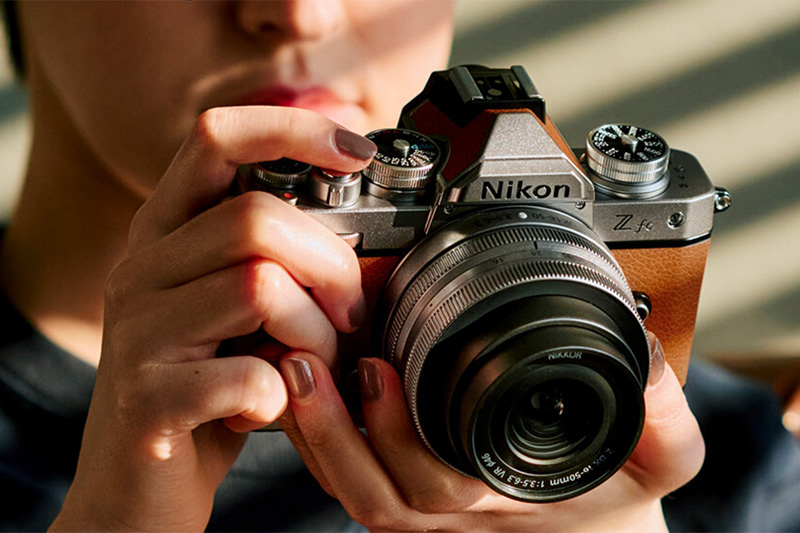
Image Quality
Image quality is good and very much in line with what you would expect from Nikon’s 20.9MP DX sensor. This is not the reason to buy the Z fc over the Z50II, because the image-quality logic is very similar.
The real difference is how the camera feels to use.
Dynamic Range
Dynamic range is solid enough for the class and perfectly usable for normal enthusiast shooting. RTINGS measures the Z fc at 11.0 stops at base ISO, which is a healthy result for APS-C and keeps it in the same broad performance class as other good 20MP-era Nikon DX bodies.
That puts it slightly ahead of Sony’s a6400 in the same RTINGS comparison, which lands at 10.7 stops at base ISO. In practical terms, the Z fc gives you enough recovery headroom for normal editing and landscape work, but it is still not a substitute for a full-frame body if maximum file flexibility is the priority.

Low-Light Performance
Low-light performance is decent for a DX camera, but full frame still has the advantage. Nikon rates the Z fc at ISO 100-51,200 standard, expandable to ISO 204,800, which means the camera has plenty of sensitivity range on paper even if the practical end of that range is much lower.
I would treat ISO 1600 and 3200 as normal working values, ISO 6400 as still usable, and ISO 12800 as the point where the files start to feel compromised. That is still respectable for APS-C, and it is enough for most everyday enthusiast shooting.
Screen And Viewfinder
The Z fc uses a 3.0-inch vari-angle touchscreen with 1.04 million dots and a 0.39-inch OLED EVF with 2.36 million dots. That is a good balance for a style-first camera because it still gives you real shooting flexibility.
Compared to the Canon EOS R50, Nikon’s screen is a little less sharp but the EVF is in the same class. Compared to Sony’s a6400, the Z fc gives you the nicer vari-angle rear screen and a more modern overall usability story, while Sony counters with a viewfinder-equipped body and better battery life. This is one of the places where Nikon balanced the nostalgic concept well without making the camera feel outdated.
Lens Mount And Compatibility
The Z fc uses Nikon’s Z mount, and that is one of the biggest reasons it works as more than just a stylish novelty. Nikon’s Z mount is still the best mount in the industry in my view, and that gives even a style-led camera like this a stronger long-term system case.
Autofocus Performance
Autofocus is good enough for the class and much more capable than the styling might lead some people to expect. This is a real camera, not a fashion accessory with a lens mount.
That said, the Z50II is the smarter Nikon DX autofocus buy if practicality is the main concern.
Video Features
The Z fc is reasonably capable for creator and hybrid use, especially thanks to the vari-angle screen and Nikon’s general feature set in this part of the lineup.
Still, I would not choose it over the Z30 if video-first simplicity were the goal, or over the Z50II if balanced hybrid usability were the goal.
Battery Life
Battery life is normal for the class. Nikon rates the Z fc at about 300 shots per charge, or about 75 minutes of movie recording. Nothing special, nothing alarming.
Sony’s a6400 is again stronger here, with Sony rating it for about 360 shots with the EVF or 410 with the LCD. So the Z fc is still a camera I would plan to charge regularly rather than one I would expect to coast through a long day.
Connectivity
Connectivity is fine and in line with what most buyers in this class will expect.
Pros And Cons
Pros
- Distinctive retro styling
- Good Nikon DX image quality
- Access to Nikon’s excellent Z system
- More fun and characterful than many cameras in this class
- Vari-angle screen helps modern usability
Cons
- Not the best Nikon DX body on pure practicality
- No in-body image stabilization
- Ergonomics are more style-led than utility-led
- Harder to justify over the Z50II unless the design really matters to you
Rating Breakdown
- Image Quality: 8.3/10
- Autofocus: 8.1/10
- Ergonomics And Handling: 7.9/10
- Build Quality: 8.5/10
- Video Features: 8.0/10
- Lens Ecosystem: 9.1/10
- Value: 8.1/10
- Overall Appeal: 9.0/10
Final Rating: 8.4/10
Value And Competition
The Z fc competes most directly with the Nikon Z50II and Z30, and more broadly with Canon’s EOS R50 and Sony’s a6400.
The clearest reason to buy it is that you want a camera with personality and still want Nikon’s modern Z system behind it. If that is not the goal, I think the Z50II is the smarter Nikon DX purchase, because it simply makes more sense as an all-around tool.
Canon’s EOS R50 is the most obvious alternative if you want a more complete stills camera at a similar APS-C price point. Sony’s a6400 is the obvious alternative if battery life and a built-in viewfinder matter more than styling. The Z fc is still the most interesting choice if the retro design is a big part of why you want to own the camera in the first place.
That is the real value story here. The Z fc is not about being the most rational choice. It is about being the most appealing choice for a certain kind of buyer.
Final Verdict
The Nikon Z fc is easy to like. It has charm, and Nikon backed that charm with enough real performance to make it matter.
But if you want the best-balanced Nikon DX camera, buy the Z50II. If you want the Nikon DX camera you will enjoy owning the most, the Z fc makes a very good case. It is the camera I would recommend with my heart, not always with my head.

Why Trust Me?
My name is Pete and I’m professional photographer and the person behind Photography Goals. I spend a lot of time comparing and researching cameras, lenses, and other gear, and my goal is to give practical recommendations based on real-world use, value, and what makes sense for your needs, not just show you spec sheets.
Related Articles
- Nikon Z50II Review
- Nikon Z30 Review (coming soon)
- Nikon Z5II Review
