The Nikon Z5II is a full-frame mirrorless camera built for photographers who want the image-quality and low-light benefits of full frame without paying for the more advanced Nikon Z6III. It takes the original Z5 idea and makes it much easier to recommend in a current market.
Quick Verdict
The Nikon Z5II is one of the most compelling full-frame cameras Nikon makes for value-focused photographers. It gives you full-frame image quality, modern autofocus, in-body stabilization, strong ergonomics, and a much more current overall experience than the original Z5. The biggest limitation is that the Z6III is still the better camera overall.
But for buyers who do not need the Z6III’s stronger speed, autofocus ceiling, and hybrid emphasis, the Z5II may actually be the better buy. Buy the Z5II if you want the value sweet spot in Nikon full frame. Skip it if you know you need the Z6III’s stronger all-around performance.
Nikon Z5II
A compelling value-focused full-frame Nikon with great ergonomics, modern autofocus, and a very convincing overall balance.
Who is this for?
Value-focused full-frame buyers, portrait shooters, family photographers, and Nikon users who do not need the Z6III’s higher-end performance.
Worth getting?
Yes, if you want the best value point in Nikon full frame rather than the more expensive all-around body.
Check Price on Amazon Check Price at Adorama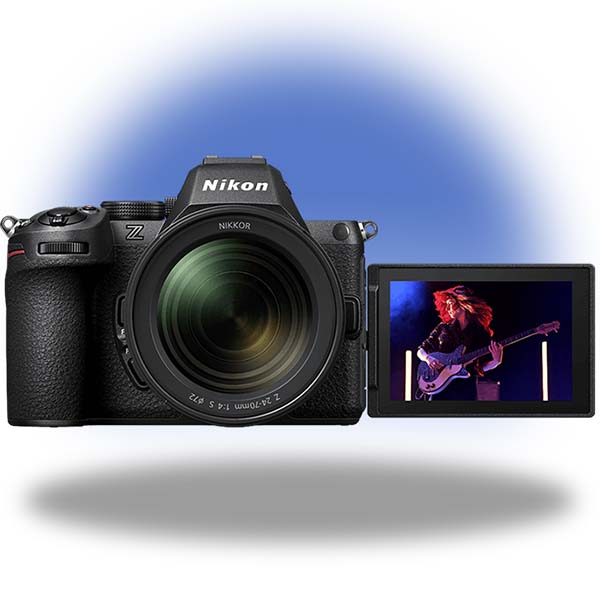
What Changed From The Nikon Z5
The Z5II is the kind of update the original Z5 needed. Nikon kept the value-oriented full-frame idea but made the body feel much more current.
The most important changes were:
- much stronger autofocus and subject detection
- 3D tracking
- more current processing and general responsiveness
- better overall shooting experience
- a more convincing modern full-frame value proposition
In practical terms, the Z5II is easier to recommend than the original Z5 because it feels like a current Nikon, not just Nikon’s cheaper full-frame body.
Key Features
The Z5II is built around a full-frame BSI-CMOS sensor, Nikon’s current autofocus logic, and the basic idea that not everybody needs a Z6III.
That is what makes it so appealing. Nikon finally made the value-oriented full-frame camera feel current enough that you do not have to explain away its age or limitations first.
Nikon Z5II Tech Specifications
- Lens Mount: Nikon Z mount
- Megapixels: Full-frame 24MP class
- Sensor Size: Full-frame BSI-CMOS
- Autofocus System: AI-based subject detection autofocus with 3D tracking
- Stabilization: In-body image stabilization
- Viewfinder: OLED EVF
- LCD: Vari-angle touchscreen
- Memory Card Slots: 2
- Card Types: SD
- Weight: Full-frame enthusiast body class
Ergonomics And Handling
This is one of Nikon’s strengths, and the Z5II benefits from it. Nikon still makes the best-handling cameras overall in my view, and the Z5II feels more serious and more comfortable than most entry-level or mid-level competitors.
That matters because a camera like this is supposed to be the body people live with for a long time.

Build Quality
The Z5II feels appropriately serious for a value-focused full-frame body. It does not feel cheap, and it does not feel like Nikon cut the camera down too far to hit a price point.
That is part of why I think it is such a compelling step-up camera.
Image Quality
Image quality is one of the strongest reasons to buy the Z5II. Full frame still matters, and Nikon’s full-frame image quality remains very competitive.
I do not think Nikon gives up anything meaningful to Sony here in practical image quality, and I still think Nikon’s overall system and ergonomics make the experience better for a lot of photographers.
Dynamic Range
Dynamic range should be very strong for the class and exactly what you would want from a Nikon full-frame body in this segment.
Low-Light Performance
Low-light performance is one of the clearest reasons to buy the Z5II over the Z50II or Z30. This is where full frame pays you back.
If you shoot indoors, in natural light, or in generally dim situations, the Z5II makes much more sense than Nikon’s DX bodies.
Screen And Viewfinder
The Z5II gives you a 3.2-inch vari-angle touchscreen with about 2.1 million dots and a 0.5-inch OLED EVF with about 3.69 million dots. That is a very good display package for a value-oriented full-frame Nikon and a big reason the camera feels more current than the original Z5.
Compared to the Canon EOS R8, Nikon gives you a bigger rear screen and a more substantial body, while Canon leans harder into compactness. Canon’s R8 is the lighter camera, and its EVF is in the same broad class, but the Nikon feels easier to live with as an everyday stills-first tool.
Compared to Sony’s compact full-frame options like the A7C II, the Z5II gives up some size advantages but gains a more comfortable grip and a more practical shooting experience. That tradeoff makes sense for the kind of buyer this camera is aimed at.
This is exactly the kind of setup that helps a full-frame step-up camera make sense for modern buyers.
Lens Mount And Compatibility
The Z5II uses Nikon’s Z mount, and that is a huge part of the appeal. I still think Nikon’s Z mount is the best mount in the industry, and on a camera like this it matters even more because buyers in this segment are often trying to choose a system they will stay with.
The Z5II makes Nikon’s full-frame system feel more approachable without weakening the long-term case.
Autofocus Performance
Autofocus is one of the biggest reasons the Z5II matters. The original Z5 was easy to like in theory, but the modern market demanded more here.
Nikon appears to have fixed that. The newer autofocus logic and subject detection make this camera much easier to recommend as a current buy instead of merely a value leftover.

Video Features
The Z5II is more hybrid-capable than the original Z5 idea ever really felt, but I still see it primarily as a photography-first full-frame camera rather than the Nikon to buy mainly for hybrid work.
If video is a major part of the decision, the Z6III still makes more sense.
Battery Life
Battery life is respectable for a full-frame body in this class. Nikon rates the Z5II at about 380 shots with the EVF or 390 shots with the LCD when power saving is on, and about 330 and 350 shots respectively when it is off. Nikon also rates video recording at about 85 minutes.
That is solid rather than class-leading, but it is enough for normal photography days, short travel outings, and family or portrait work if you are not constantly reviewing images. For longer days, I would still treat a spare EN-EL15c as the practical purchase.
Compared to the Canon EOS R8, the Z5II is easier to trust as an all-day camera because the body and battery setup feel more substantial. Compared to Sony’s compact full-frame bodies, Nikon’s battery story is not dramatically better on paper, but the overall handling and power flexibility are better matched to the buyer who wants a more traditional camera experience.
Connectivity
Connectivity is current and sufficient. No reason for concern here.
Pros And Cons
Pros
- Strong full-frame value position
- Much easier to recommend than the original Z5
- Strong Nikon ergonomics
- Better low-light appeal than Nikon DX bodies
- Access to Nikon’s excellent Z system
Cons
- Still not the Nikon to buy if you want the strongest speed and autofocus ceiling
- Less compelling than the Z6III for heavy hybrid use
- More expensive than Nikon DX options
- Harder to justify if the Z6III is priced close enough
Rating Breakdown
- Image Quality: 8.7/10
- Autofocus: 8.6/10
- Ergonomics And Handling: 9.1/10
- Build Quality: 8.5/10
- Video Features: 8.3/10
- Lens Ecosystem: 9.2/10
- Value: 9.0/10
- Overall Appeal: 8.7/10
Final Rating: 8.8/10
Value And Competition
The Z5II’s clearest competition is the Nikon Z6III above it, the Nikon Z50II below it, and cameras like the Canon EOS R8 and Sony A7C II in the broader market.
The best reason to buy the Z5II is that it gives you the full-frame Nikon experience at what is likely the best value point in the lineup. If you want the better all-around camera, buy the Z6III. If you want the better value full-frame camera, I think the Z5II may be the answer.
Against something like the Canon EOS R8, I would rather have the Nikon because the Z5II gives you in-body stabilization, a more substantial body, dual card slots, and a shooting experience that feels more like a serious camera than a minimalist one. The Canon is lighter and more aggressively compact, but Nikon feels like the better long-term value if you want a camera you can keep using comfortably.
Against the Sony A7C II, the Z5II makes a strong case by being more straightforward, more comfortable, and more obviously stills-first. Sony has the smaller body, but Nikon has the friendlier handling and the better all-around value for photographers who do not want to compromise too hard on ergonomics.
That is what makes it so useful. It gives Nikon a full-frame body I can recommend to a lot of normal photographers without immediately pushing them higher.
Final Verdict
The Nikon Z5II looks like one of Nikon’s most compelling cameras for value-focused full-frame buyers.
I would not buy it over the Z6III if I knew I needed the extra performance. But for a lot of photographers who just want a good, current, well-handling full-frame Nikon, the Z5II may be the sweet spot. This feels like the Nikon full-frame camera a lot of normal buyers should start with.

Why Trust Me?
My name is Pete and I’m professional photographer and the person behind Photography Goals. I spend a lot of time comparing and researching cameras, lenses, and other gear, and my goal is to give practical recommendations based on real-world use, value, and what makes sense for your needs, not just show you spec sheets.
Related Articles
- Nikon Z6III Review (coming soon)
- Nikon Z50II Review
- Nikon Z30 Review (coming soon)
