The a6100 is a step above Sony’s entry level mirrorless camera and is perfect for leveling up your skills and learning more advanced photography skills. So you’ll want to have high quality lenses that allow you to use the full potential of the camera.
My pick as the best lens for the Sony a6100 is the Sigma 18-50mm f/2.8 DC DN Contemporary Lens because of its combination of versatility, image quality and wide f/1.8 aperture make it unique and an exceptional choice for crop sensor Sony users.
But keep reading for my full breakdown of that lens and more options that might be a better fit for your specific needs.
Photography Goals uses affiliate links. When you buy products through the links on our site, we may earn a commission.

1. Sigma 18-50mm f/2.8 DC DN | C
The Sigma 18-50mm f/2.8 DC DN | C lens is a great choice for Sony a6100 users due to its versatile focal length range, constant aperture, excellent optical performance, compactness, and affordability.
This lens is a standout and one that I would recommend for all of the Sony crop sensor cameras. It’s basically a crop sensor version of the 24-70mm f/2.8 lens that can be found in the bag of many professionals.
The 18-50mm focal range on a crop sensor camera gives you the full frame field of view of 27-75mm so you’re getting a very versatile and useful focal length.
Sigma 18-50mm f/2.8 DC DN | C Specs
- Lens Mount: Sony E
- Format: APS-C
- Aperture Range: f/2.8 – f/22
- Minimum Focus Distance: 12.1-30cm / 4.8-11.9in.
- Filter Size: 55mm
- Lens Construction: 13 elements in 10 groups
- Diaphragm Blades: 7
- Stabilization: No
- Dimensions: 65.4 x74.5mm / 2.6in.×2.9in.
- Weight: 290g / 10.2oz
The constant f/2.8 aperture allows for excellent low light performance and a shallow depth of field, which is great for creating bokeh (background blur) in portraits and other subjects.
This also opens up more potential for shooting in low light and is one of the major upgrades compared to some of the kit lenses that Sony packages with this camera.
But unlike those kit lenses, this is going to give you excellent optical quality and sharpness. You can produce everything from wall worthy landscape photos to professional level portraits.
Overall, you’re getting a very high quality lens at an affordable price that can do everything except long telephoto shots.
But if you want an even bigger focal range, then check out this next lens…
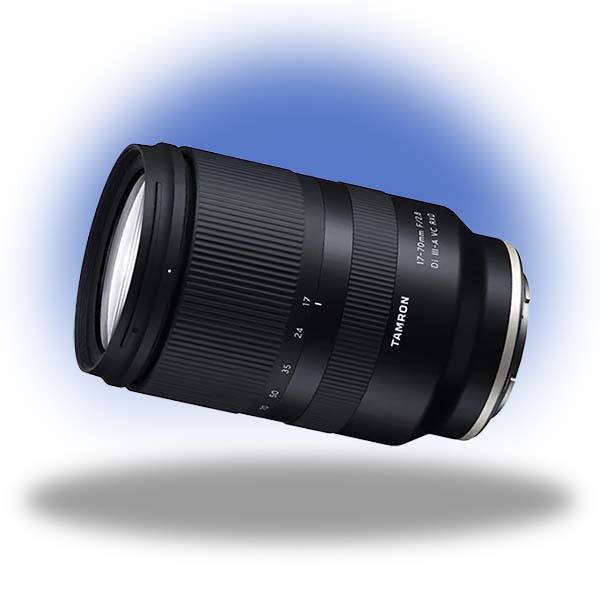
2. Tamron 17-70mm F/2.8 Di III-A VC RXD
This lens covers a big zoom range and still delivers excellent image quality.
With a 17-70mm range (25.5-105mm full frame equivalent), it covers a wide to short-telephoto perspective meaning you can shoot just about anything with this lens.
In fact these top two picks could really be 1a and 1b because it really depends on whether you want the extra reach of the Tamron or the smaller and lighter Sigma, so I’ve done a little bit of comparison below.
Tamron 17-70mm F/2.8 Specs
- Lens Mount: Sony E
- Format: APS-C
- Aperture Range: f/2.8 – f/22
- Minimum Focus Distance: 19-39cm / 7.5-15.4in.
- Filter Size: 67mm
- Lens Construction: 16 elements in 12 groups
- Diaphragm Blades: 9
- Stabilization: Yes
- Dimensions: 65.4 x74.5mm / 2.6in.×2.9in.
- Weight: 525g / 18.5 oz
Like the Sigma, it has a constant f/2.8 aperture which is great for low light shooting.
It also has built in image stabilization, which is helpful because the a6100 does not have in-body image stabilization (IBIS). This will let you shoot stationary subjects at slower shutter speeds than you could normally do handheld.
Two big reasons I put this lens in the runner-up position rather than the top spot was the size and cost.
At 1.2lbs/525g it’s almost double the weight of the Sigma which comes in at 10.2oz/290g. The Tamron is also about 10mm wider and 55mm longer. That’s enough of a difference that you’ll feel it on a long hike.
The Tamron lens also costs about $150 more than the Sigma.
In terms of image quality, you would be hard pressed to notice any difference on casual viewing, but my job here is to pixel peep so you don’t have to and I would give a very slight edge to the Sigma in terms of sharpness, even though both deliver excellent image quality.
Note For Video Shooters: If you want to shoot a lot of video, then go with this Tamron lens. In addition to the image stabilization (which matters a lot when shooting handheld video), the lens is parfocal (it doesn’t lose focus while zooming in and out) and has almost 0 focus breathing.
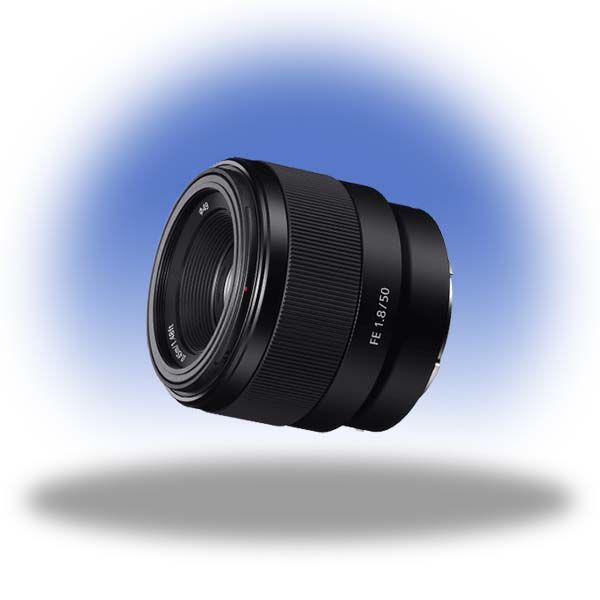
3. Sony FE 50mm f/1.8
Affordable and fast lens with great optical quality.
The combination of a fast aperture, effective focal length, compact design, and affordability makes