The Nikon Zf is a retro style camera with modern technology under the hood. That means that the best lenses for the Zf are going to have style and substance.
That is why my top pick is the Nikon Z 40mm f/2. It’s the perfect blend of style and excellent image quality at a focal length that can cover a lot of shooting situations.
Keep reading for my detailed breakdown and more options depending on the type of photography you plan on using your Zf for the most.
Photography Goals uses affiliate links. When you buy products through the links on our site, we may earn a commission.
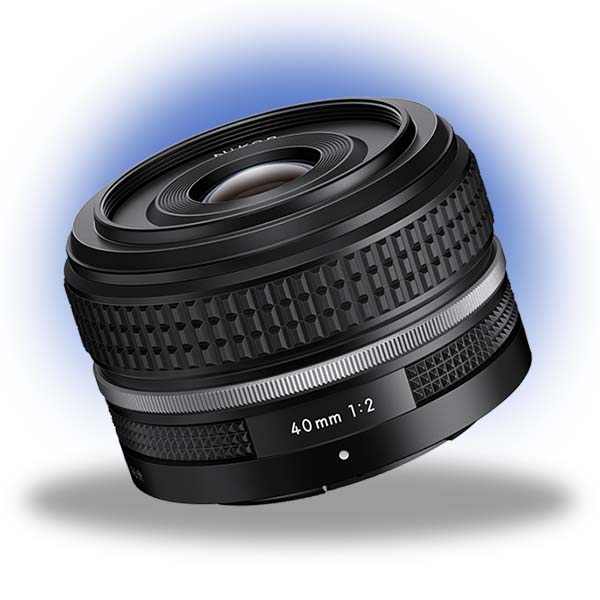
1. Nikon Z 40mm f/2 (SE)
This 40mm prime has the retro look to match the Zf and optical performance to match the impressive 24.5MP sensor.
This might be a surprising pick for the top spot considering it’s a fixed focal length prime lens. But I chose it because it just pairs so well with the Zf that it’s almost like they were designed to get together.
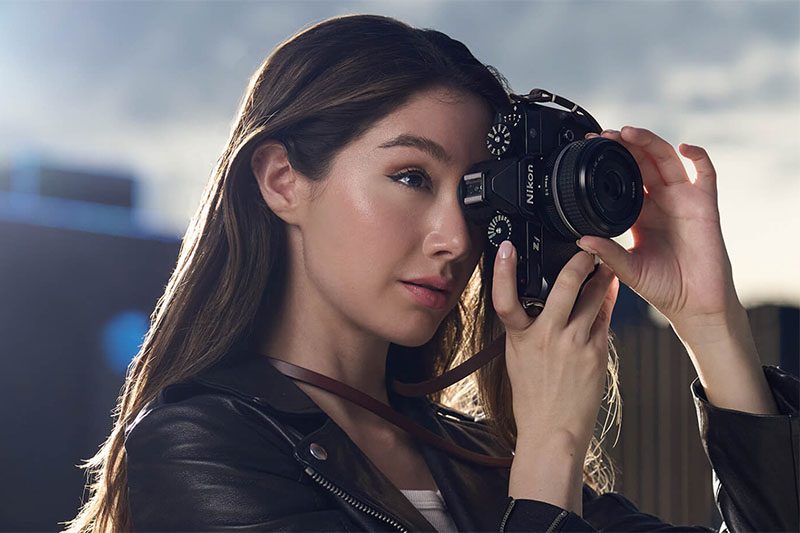
Let’s face it, if you bought or are planning to buy a Nikon Zf then you appreciate the retro style of that camera. This 40mm f/2 lens matches that combination of style and performance.
But its more than just the look of the lens. The 40mm focal length is the perfect walk around lens to keep on your Zfc for everyday shooting (similar to how the 28mm f/2.8 lens works great on the Zfc).
It’s not so wide that you’ll introduce distortion, but on a full frame camera, it gives you enough field of view that you can take photos at close quarters like indoor parties.
Speaking of shooting indoors, the f/2 aperture is pretty impressive for such a compact, lightweight, and inexpensive lens. Combined with the exceptional low light performance of the Zfc, this combo is perfect for indoor and low light shooting.
Finally, in terms of optical quality, you’re getting a very sharp lens for a pretty low price here. You might see a tiny loss of sharpness around the edges when shooting wide open, but not much and certainly less than other primes at this price point.
This is the lens I would get for my Zf and leave it on the camera almost all the time unless I needed to shoot something specific that requires a different lens.

2. Nikon Z 24-70mm f/2.8 S
This lens is the Nikon Z mount version of the popular 24-70 f/2.8 lens. This is Nikon’s sharpest version to date and comes in lighter and smaller than its predecessors.
The 24-70mm f/2.8 S lens in the Z mount lineup is quite impressive. It packs a wide max aperture and a good mid-range focal length and delivers industry-leading image quality.
The two reasons it’s not my top pick are (1) it’s quite expensive and (2) a high end professional lens like this doesn’t exactly fit the aesthetics of the Zf.
But if you plan to use your Zf for a wide variety of shooting genres and want professional level performance, then this is a great option.
There’s a reason that the 24-70 f/2.8 lens can be found in almost any professional photographer’s bag. You can shoot anything from wide-angle landscapes to longer focal-length portraits with this lens. Plus the f/2.8 max aperture means you’ll have a lot of control over depth of field and have the ability to shoot in low light.
It is also one of the sharpest 24-70mm lenses that you’ll find in any camera system. This lens takes full advantage of the Nikon Z mount to create exceptional image quality.
The autofocus performance is top-notch as well. It uses two AF drive units synchronized to deliver extremely fast and accurate autofocus. This works well paired with the excellent autofocus system of the Zf.
On top of all that, this lens comes in lighter and smaller than the F-mount counterpart that was itself one of the best 24-70mm options out there.
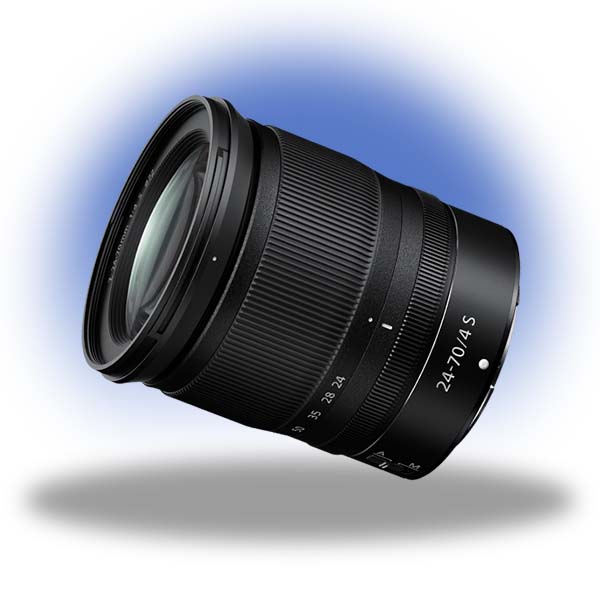
3. Nikon Z 24-70mm f/4
The f/4 version of the Nikon Z 24-70mm is very close in sharpness and color and if you don’t need the f/2.8 max aperture then you can save over $1000 with this lens.
I put this lens on the list because it’s a versatile all-around lens, similar to the 24-70mm above. It has a smaller max aperture at f/4 but still has excellent sharpness across the frame and optical performance in general. It’s also around about $1100 cheaper than the f/2.8 version that made the top slot.
This is a good option if you don’t see yourself needing the f/2.8 aperture very much and value affordability and portability over low-light performance.
For instance, if you plan on using this zoom lens for landscape photography, then you’ll get all the performance you need and may never miss the f/2.8 max aperture.
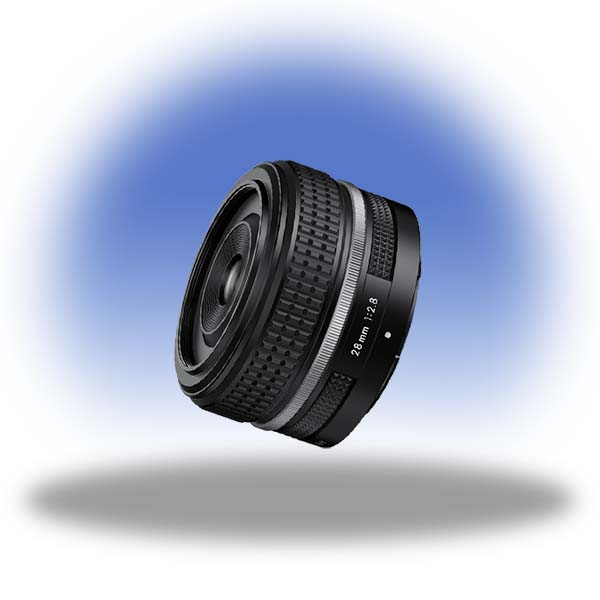
4. Nikon Z 28mm f/2.8 (SE)
This compact 28mm lens has a nice wide f/2.8 max aperture and its size pairs nicely with the Zf as a great walk-around combo.
This might be my personal favorite lens to carry around with me on a regular basis.
It’s small and lightweight enough that pairing it with the Zf makes for a very small setup that is perfect for everyday shooting.
If I am taking a Nikon Zf to a party, a family get-together, or just out with friends, this is the second lens I would have with me along with the 40mm f/2.
The 28mm focal length is wide enough that you don’t have to back up to get photos of the people around you and is also a great option for getting photos of the area around you. But 28mm isn’t so wide that photos of people will be distorted.
In addition, the f/2.8 max aperture makes it easier to get shots in low light, especially compared to the kit lenses often found bundled with cameras that have max apertures in the f/4-6.3 range.
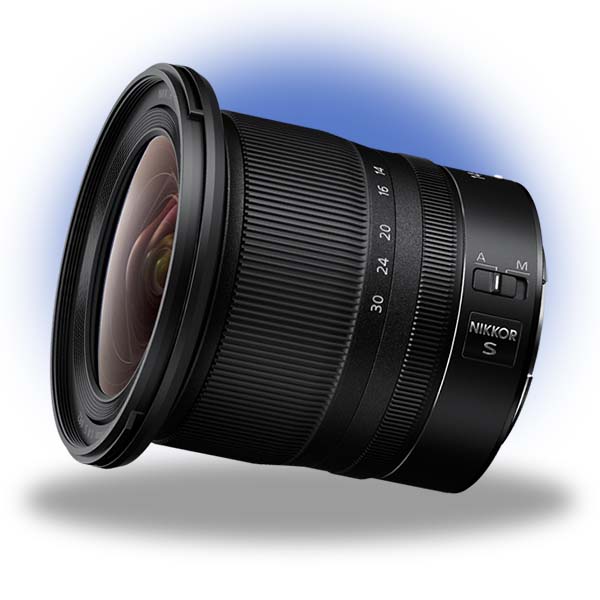
5. Nikon Z 14-30mm f/4
This lens has everything a landscape photographer needs, great sharpness and color, a compact but rugged build, and the ability to use standard 82mm filters.
You might be surprised that I chose this lens over the more expensive 14-24mm f/2.8 S lens. There are three reasons for that.
First, this lens is over $1000 cheaper than the f/2.8 version and still exceptionally sharp. Second, it is lighter and more compact, which you’ll appreciate if you end up hiking to any landscape location carrying your gear on your back.
Third, and arguably the most significant is that this is the rare zoom lens that lets you shoot as wide as 14mm and still use conventional 82mm filters. If you shoot landscapes for any length of time, you want to start using filters to help control glare and cut down on light for long exposures and it can be quite frustrating to need an entirely different set of filters just for one lens.
This lens makes it possible to have a single set of filters for all your lenses. The time and money you save on that alone make this lens worth it.
I wouldn’t worry too much about the f/4 max aperture either. It’s rare that you would ever use a wide aperture like that for shooting landscapes. If you shoot astrophotogra