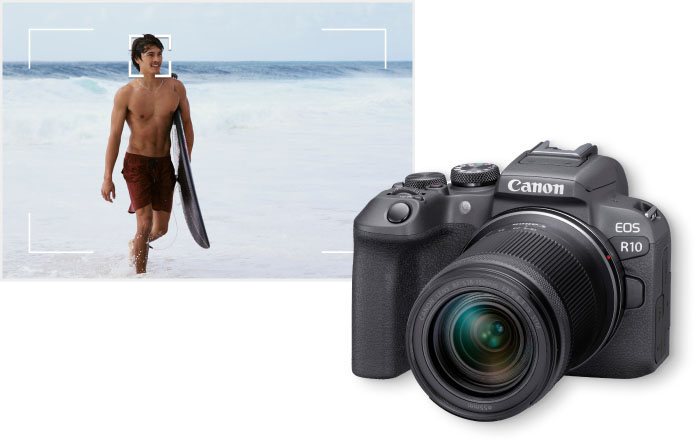
The Canon EOS R10 is an affordable and very capable crop sensor camera in Canon’s lineup and made my list of the best Canon cameras for beginners.
What I love about this camera is that its affordable for beginners but has enough features that you can get high end professional results with the right lenses.
My pick for the best lens for the Canon R10 is the 28mm f/2.8 because the compact size and wide maximum aperture make it a versatile lens and affordable lens that will give you professional quality images. This is the first lens I’d suggest to buy with the camera or to replace the kit lens that came with it.
But depending on what you shoot most, you may want a different option. So keep reading to see my complete breakdown of the best lenses for the Canon R10 based on what might be right for you.
Photography Goals uses affiliate links. When you buy products through the links on our site, we may earn a commission.
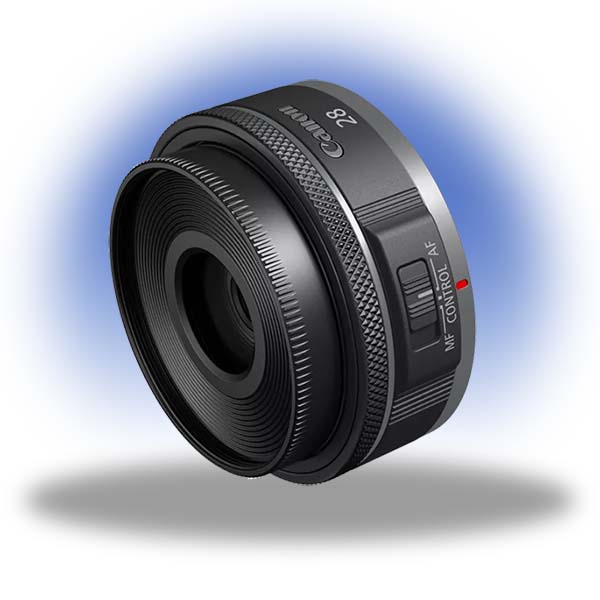
1. Canon 28mm f/2.8
This compact 28mm lens has a nice wide f/2.8 max aperture and its size pairs nicely with the compact R10 for a great walk-around combo.
A mid range fat prime is my favorite kind of lens to carry around on a crop sensor camera. To begin with, it’s small and lightweight enough that pairing it with the R10 makes for a portable kit that is perfect for everyday shooting.
In addition to that, the 28mm focal length (45mm full-frame equivalent on the R10) is wide enough to capture scenery but not so wide that pictures of people are distorted. Combine this with the f/2.8 aperture and it’s about as versatile a prime lens as you can get.
This is a great focal length to carry around while traveling, shooting street photography, or just going out with friends.
Replacing that kit lens with an f/2.8 prime lens really opens up a lot more possibilities like portrait photography with a blurred background, low light photography, or even things like astrophotography.
I think the wider consistent aperture is far more valuable than a zoom lens with a small maximum aperture.
As for image quality, I was happily surprised with the sharpness and contrast of this lens given its small size and low cost. Because it’s a prime lens the optics are simple and extremely sharp.
This lens also works on full frame Canon RF cameras, so if you upgrade in the future, you’ll have a great wide prime for your full frame camera as well.
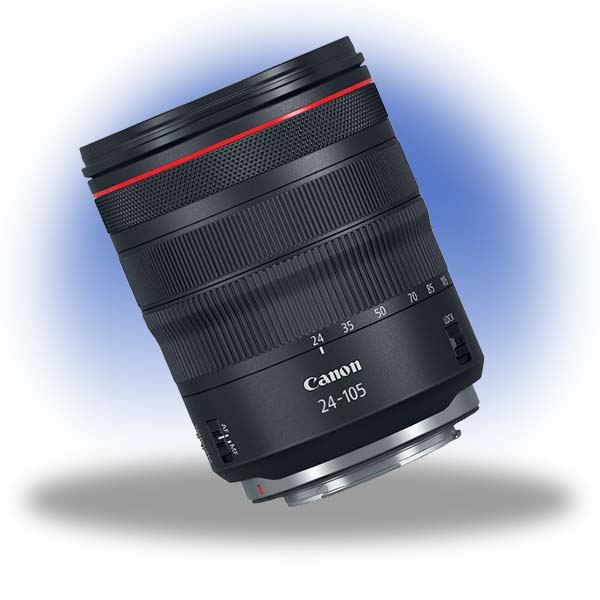
2. Canon 24-105 f/4
This lens covers a wide focal range with a fixed f/4 max aperture which makes it a great lens to keep on your camera in a variety of situations.
If you feel like you need a zoom lens with a big focal range then you may want to consider investing in something that performs a bit better than the kit lens options.
The 24-105mm f/4 lens gives you a decent f/4 maximum aperture with a very wide focal range and still delivers very good image quality. I like this lens for the R10 because its compact size coupled with a big focal range.
On the crop sensor R10 the effective focal range is 38mm to 168mm.
You can shoot everyday shots and even some landscapes at 24mm and still have the reach for far away objects at the 105mm end. This makes it the kind of lens that you can put on your R10 and leave it there.
I like this option as an everyday lens for this camera a lot better than the 18-45mm f/4.5-6.3 that is often sold as a kit lens with it. You’ll get sharper images and better colors as well as the consistent f/4 max aperture across the entire focal length.
Fair warning, this lens is more expensive than the kit lens by a good amount. But its a solid investment as you can use it on full frame Canon RF mount cameras as well, where it serves the same purpose as an all-around performer.
Of course, for very low light situations, you may want to have the 28mm f/2.8 above or the 35mm f/1.8 below, but this lens will work in most circumstances.
If you travel a lot and don’t want to bring multiple lenses or are just looking for one lens that can handle the widest variety of shooting situations then this is a great option.
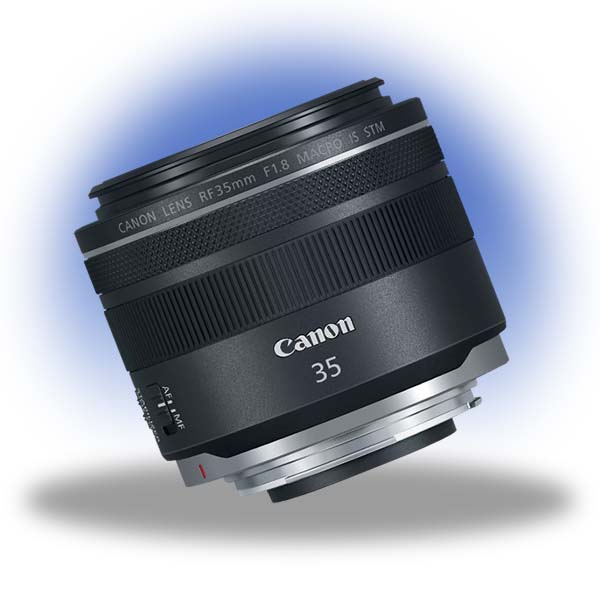
3. Canon 35mm f/1.8 Macro IS STM
With an equivalent focal length of 52.5mm on the crop sensor camera, this is the lens that every R10 owner should buy once they realize the kit lens isn’t getting it done.
The 35mm f/1.8 is the lens I recommend for almost anyone with a crop sensor camera. The f/1.8 aperture opens up an entire world of possibilities compared to most kit lenses.
The 35mm focal length will be equivalent to 56mm on a full frame camera. This makes it similar to using the very popular “nifty-fifty” on a full frame camera.
The f/1.8 aperture is often a massive difference for anyone that’s never used a lens with a wide maximum aperture like that before. It will allow you to experiment with shallow depth of field as well as shoot in low light.
If you plan to use it for things like photographing your kids or get-togethers with friends and family, you’ll be thankful to have the option to use f/1.8, especially in indoor situations. You’ll find that indoor lighting is often far darker than you perceive it with your eyes.
The R10 makes for a great everyday camera to keep with you because of its smaller size and light weight. So another added benefit of this lens is the compact size. Paired with the small R10, it makes for an easy kit to carry around with you.
If you want a little more low light capability than the two options above, then I highly recommend checking out this 35mm lens.
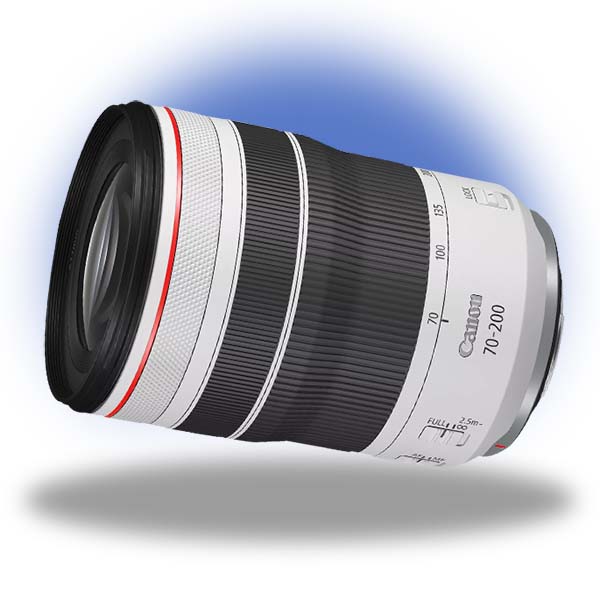
4. Canon 70-200 f/4
Closer to a pro lens (but more affordable) the 70-200 f/4 will work great on the R10 for those of you that want some extra reach to shoot things like your kid’s sports.
The R10 has some impressive action shooting capabilities (up to 23 fps) so it makes sense as an affordable option for sports.
I’m assuming you don’t want to spend a ton on expensive telephoto glass, but be wary of the 50-210mm f/5-7.1. When you shoot a longer focal lengths, you need a faster shutter speed to avoid blur from handholding the camera and an f/7.1 aperture can make it very difficult to do that unless you’re shooting in bright sunlight.
So even though the 70-200 f/4 is not cheap (coming in at $1400 MSRP) it’s still a lot less than the f/2.8 version and f/4 can be good enough in many situations. It’s certainly a big step up from f/7.1.
But I recognize budget might be important. So if you plan to shoot mostly in daylight, you can save $1000 and go for the 55-210mm f/5-7.1. Just be aware that the image quality is a bit less and you’re going to have to shoot at much higher ISO settings. The good news is that the R10 handles higher ISOs better than most crop sensor cameras.
Back to the 70-200mm f/4…
You’re going to get exceptional image quality in terms of both sharpness and color rendition. This pairs nicely with the 24-105 above to give you a huge focal length range with just two lenses.
5. Canon 50mm f/1.8 STM
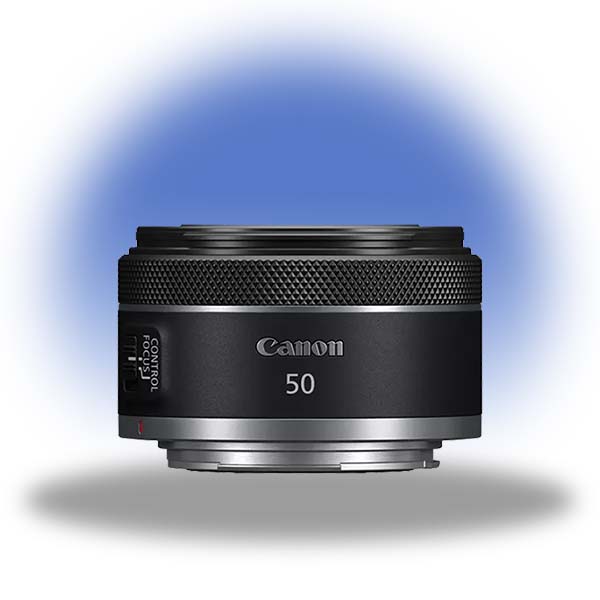
This lens is an 80mm equivalent on the R10 crop sensor which makes it perfect for shooting portraits.
The Canon 50mm f/1.8 has all of the same benefits as the 35mm version, but if you are shooting a lot of portrait photography, then the 50mm will be a 80mm equivalent on the R10 which is a perfect focal length for portraits.
By using a longer focal length, you’ll be able to stand farther away from your subject while still filling the frame. This adds something called compression in photography, which typically helps to give a more flattering look to people.
Of course, the longer focal length also can be somewhat limiting for everyday use. So keep that in mind. This lens is great as a second or third option for the R10 while the ones at the top of this list are more versatile and good for everyday use.
The best part of this “nifty fifty” lens is that its one of the cheapest options out there for your R10. In fact, this was my “budget pick” on my list of the best Canon lenses for portraits.
6. Canon 16mm f/2.8
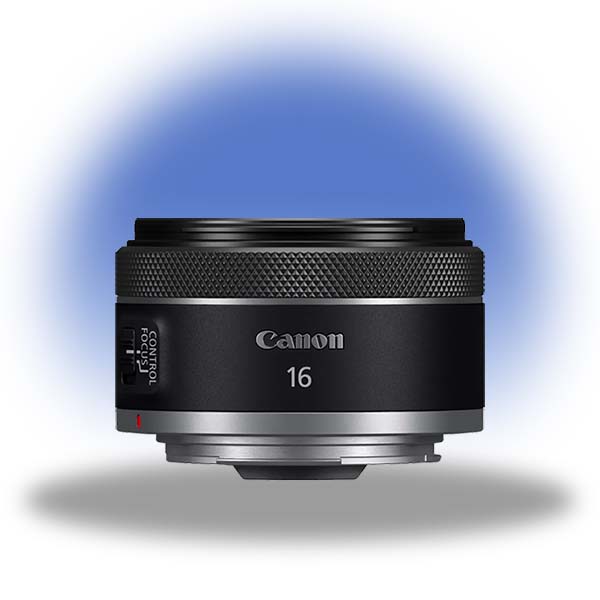
This 16mm f/1.8 gives you a wide angle and a fast aperture for shooting almost any kind of landscape from mountains to astrophotography.
You might be surprised that I didn’t choose one of the wide angle zoom lenses for this pick. To show you why, let’s take a look at some of those options…
The 10-20mm f/4 comes in at $2,299 MSRP, the 15-35mm f/2.8 comes in at $2,099 MSRP, and the most affordable wide angle zoom is the 14-35mm f/4 at $1,199 MSRP. Compare this to the 16mm f/2.8 at $299 MSRP and you can see why it’s such an attr