I took a look at the 13 DSLR and 11 mirrorless options by Nikon currently available and tested many of them out in the field and came to the conclusion that the Nikon Z8 is the best Nikon camera for sports photography.
Taking advantage of an impressive focusing system, a high frame rate, and some excellent lenses in the Z mount lineup, this camera has everything you need for capturing the perfect sports moment.
You can also check out my overall guide to the best Nikon cameras as well as a few you should avoid.
Photography Goals uses affiliate links. When you buy products through the links on our site, we may earn a commission.
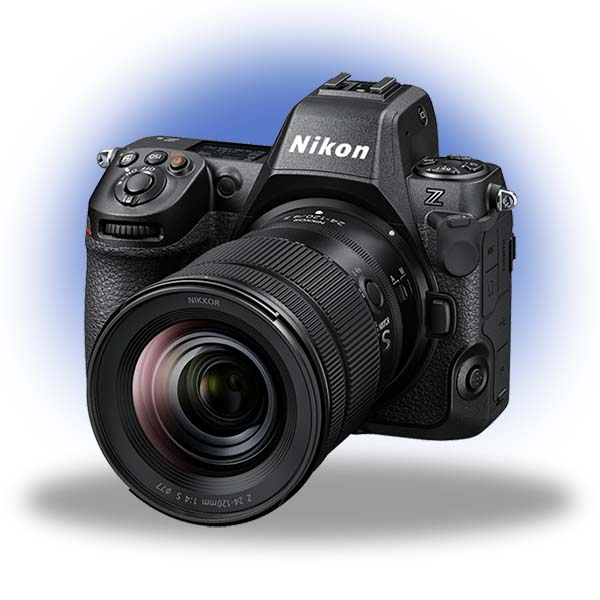
1. Nikon Z8
The Nikon Z8 is arguably one of the best mirrorless cameras on the market today. It combines a 45.7 megapixel sensor with fast shooting frame rates and one of the best autofocus systems to make it an amazing camera for shooting sports.
This was one of the most anticipated cameras in the Nikon lineup in years and it didn’t disappoint. It takes all of the features from the flagship Z9 and puts them into a smaller body without giving up anything except a bit of battery performance (which makes sense given the lack of a vertical battery grip).
…and it does that for $1500 less.
That’s why it’s at the top of my list of the Best Cameras For Sports, so let’s get into the specs…
Z8 Tech Specifications
- Lens Mount: Nikon Z
- Megapixels: 45.7
- Sensor Size: Full-Frame (35.9 x 23.9mm) stacked CMOS
- Sensitivity Range: ISO 64 to 25,600 (expands to 32 to 102,400)
- Autofocus System: 493-point hybrid AF with subject detection, 3D tracking, and approximately 90% frame coverage
- Continuous Shooting Speed: Up to 20 fps RAW, up to 120 fps 11MP JPEG
- Monitor: 3.2-inch vertical and horizontal tilting, 2.088m dots
- Max Shutter Speed: 1/32,000 sec.
- Buffer: 1000+ frames (when shooting only to XQD/CF Express)
- Stabilization: 5-axis in body
- Viewfinder: EVF 3.69m dots, 100% coverage, .8x magnification
- Max video resolution: 8K up to 30p, 4K up to 120p (no crop)
- Memory Card: 2 slots (1 XQD/CFexpress and 1 SD/SDHC/SDXC UHS-II)
- Dimensions: (W x H x D): 144 x 118.5 x 83 mm / 5.7 x 4.7 x 3.3″ inches
- Weight (battery incl.): 910g / 32.1oz
The first thing we’ll talk about is the sensor. The Z8 has the same 45.7 MP “stacked” BSI CMOS type sensor and has a native sensitivity of ISO 64-256,000, with expansion to ISO 32-102,400.
The stacked sensor means there’s no blackout in the electronic viewfinder while shooting. So you can track the athlete without interruption and hold focus the entire time you’re shooting.
I like shooting sports with a higher resolution sensor like this. It means that even if you don’t have quite the reach you need with your lens, you can crop in later to get the athlete to fill the frame.
This also makes it easier to track the action as you don’t have to be fully zoomed in on the athlete to end up with a nice tight shot that maintains a high resolution.
There are cameras out there that give you over 60 megapixels and similar specs, but there’s not much noticeable gain when you go from 45 to 60 other than bigger files.
The Z8 has excellent color fidelity that is comparable to the top full frame cameras at this price range such as the Sony A7RV.
When it comes to dynamic range, the Z8 similarly compares well with other cameras in this class. You’ll get about 14 stops of dynamic range at the base ISO of 64. It also has excellent performance at higher ISO settings which can be critical when shooting sports in low light venues line indoor arenas and gyms.
What really makes the Z8 stand out above all of the other competition is that it really doesn’t have any weaknesses.
Probably the only downside of the Z8 when compared to the Z9 is that the battery life isn’t as long as the larger Z9, so if you don’t mind using a larger, heavier, and more expensive body then check out the Z9 below.

2. Nikon Z6II
The second version of the Z6 has improved focusing, an exceptional sensor, and 14 frames per second. With the growing collection of Z mount lenses, you can take advantage of cutting-edge technology in lenses.
24.5 MP | Full Frame (FX) Sensor | ISO 100 – 51,200 | 14 Frames/sec | Nikon Z Mount | Weight: 21.7 oz. (615 g)
The Nikon Z6II is Nikon’s improvement first generation mirrorless Z6. It’s my runner up here for shooting sports because of the shooting speed and image quality as well as the ability to use Nikon Z mount lenses which continue to impress with each new lens released.
The Z Mount Nikon S 70-200 made my list of the best Nikon lenses for sports photography.
The 24.5 Megapixel sensor is kind of a sweet spot of resolution for shooting sports. It gives you enough detail to crop in a bit but also isn’t so large that it slows you down. If you want high resolution and fast shooting, you’ll pay a premium for either the top pick Z8 above or the Z9 that also made this list.
Z6II Tech Specifications
- Lens Mount: Nikon Z
- Megapixels: 24.5
- Sensor Size: Full-Frame (35.9 x 23.9mm) backside illuminated (BSI) sensor
- Sensitivity Range: ISO 100-52,200 (expands to 50-204,800)
- Monitor: 3.2-inch tilting, 1.04m dots
- Continuous shooting speed: 14fps
- Stabilization: 5-axis in body
- Viewfinder: EVF, 3.69m dots
- Screen: Tilting 3.2 inch 1,040,000-dot touchscreen
- Max video resolution: 4K UHD at up to 60p
- Memory Card: 2 slots (1 XQD/CFexpress and 1 SD/SDHC/SDXC UHS-II)
- Dimensions: (W x H x D): 134 x 100.5 x 69.5 mm / 5.3 x 4 x 2.8-inches
- Weight (battery incl.): 705g /1lb. 4.9oz
With 14 frames per second, the Z6II is more than fast enough for most sports. If you want to shoot faster than that, you’ll have to spend more than double for the Z9 (more about this one below).
Of equal importance is the increased buffer depth, meaning you can take more shots in continuous mode before the camera needs to stop. For many sports photographers, this is even more critical than frames per second. A large and fast buffer means less time that you’ll have to wait for it to clear before shooting again.
This camera also handles low light exceptionally well which means shooting indoor sports like basketball or ice hockey isn’t a problem, even when the light is less than stellar (such as shooting in a high school gym).
Overall, you really can’t go wrong with this camera, which is why it’s my overall recommended camer